Trane Buying Guide for Pomona Homes
No-fluff answer: Buying a Trane system in Pomona comes down to tier and sizing: an XR single-stage suits most homes across ZIPs 91766, 91767, and 91768, while a variable-speed XV earns its premium on larger Phillips Ranch and Ganesha Hills houses, so call Pomona Trane HVAC at (213) 449-4344 or book online to size by load calculation, not guesswork.
Key details
- DOE Southwest-region AC floor (Pomona's region): split systems under 45,000 BTU rate 14.3 SEER2 / 11.7 EER2.
- Split-system air-source heat pumps have to clear 14.3 SEER2 paired with 7.5 HSPF2.
- Trane tiers: XR single-stage (value), XL two-stage (enhanced), XV18/XV20i variable-speed (premium).
- Furnace: 80% AFUE often adequate in mild Zone 9; modulating XC95m reaches ~97.3% AFUE.
- New AC $5,000-$12,000; heat pump $6,000-$16,000; furnace $3,000-$7,500 (typical 2026 SoCal).
- No federal 25C credit on 2026 installs - it ended 12/31/2025; check LADWP/SCE/SoCalGas/TECH amounts yourself.
Which Trane AC tier should a Pomona home buy?
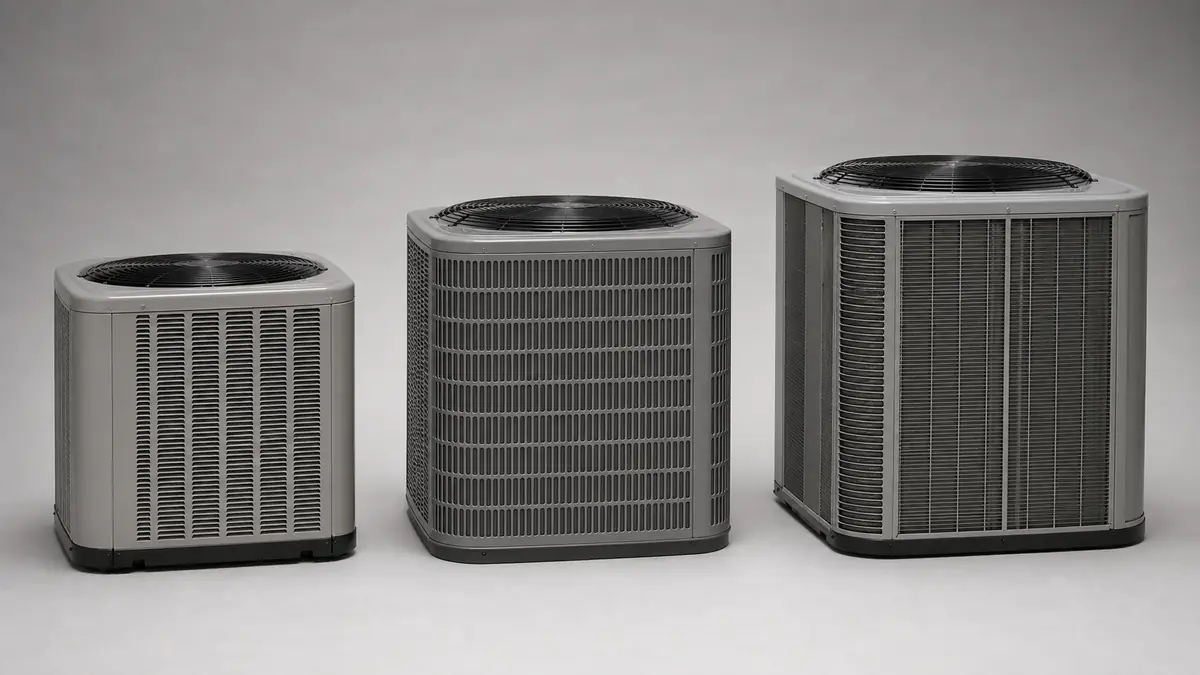
Trane's residential lineup steps up in three tiers, all built on the same Climatuff compressor and Spine Fin coil. The single-stage XR (XR13 to XR17) is the value workhorse - it runs at one speed and is the cheapest to buy and repair. The XL two-stage adds a low and high stage for steadier comfort. The variable-speed XV18 and XV20i modulate continuously for the quietest, most precise control and the highest SEER2 (up to ~20.5 on the XV20i), but they require a communicating ComfortLink II control and cost more to repair. For Pomona's climate, the deciding question is home size and comfort expectation, not heat tolerance - all three handle the load if sized right.
| Tier | Models / best for | Installed lane |
|---|---|---|
| XR single-stage | XR13-XR17; most modest, well-ducted homes | $5,000 - $9,000 |
| XL two-stage | XL-series; balanced comfort and efficiency | $7,000 - $10,500 |
| XV variable-speed | XV18 / XV20i; large homes, quiet, top rebates | $9,000 - $12,000 |
What SEER2 and Title-24 rules apply in Pomona?
Pomona buys into the DOE Southwest region, the tightest of the three on cooling. A split AC under 45,000 BTU has to make 14.3 SEER2 / 11.7 EER2, anything at 45,000 BTU and up drops to 13.8 SEER2 / 11.2 EER2, and an air-source heat pump has to land 14.3 SEER2 with 7.5 HSPF2. Layer Title-24 Climate Zone 9 over that, and dropping in a new or replacement split system kicks off refrigerant-charge and airflow HERS field verification, while touching the ducts kicks off duct-sealing HERS verification. Before you sign anything, pin down the current minimums and HERS triggers for your exact equipment class and code cycle. The permit and the rater both ride on our install quote.
Gas furnace or heat pump for a Pomona home?
Pomona's mild winters tilt this decision toward heat pumps more than a cold climate would. A single Trane heat pump can cover both heating and cooling, eliminating a separate gas furnace - simpler and a candidate for electrification rebates. If you keep gas heat, an 80% AFUE furnace (XR80, XL80) is frequently adequate here; the modulating XC95m at 97.3% pays back slowly given the short heating season. The table frames the choice.
| Option | Best for | Installed lane |
|---|---|---|
| 80% gas furnace | Keep gas; mild Zone 9 value | $3,000 - $5,000 |
| ~96-97% gas furnace | Heavy heat use or quiet variable-speed | $4,500 - $7,500 |
| Trane heat pump (ducted) | One system, electrification, rebate candidate | $6,000 - $16,000 |
How big a system do I need?
Correct tonnage comes off a Manual J load calculation, the trade-standard method - not square footage run through a tons-per-area shortcut. Going too big is the costliest buying mistake Pomona homeowners make: an oversized unit hits the setpoint fast, short-cycles, never pulls the humidity down, and chews through parts ahead of schedule. We measure insulation, window load, orientation, and duct capacity, then spec the Trane gear to that number. On older Lincoln Park and Wilton Heights homes the ducts usually set the ceiling on practical size, which is exactly why ductwork gets looked at first.
What does a worked Pomona sizing example look like?
Take two real-world Pomona homes to see why the rule of thumb misleads. The old square-footage shortcut says 1 ton per 400 to 600 square feet, which would slap a 4-ton unit on a 1,900 square foot home regardless of its envelope. A Manual J tells a different story for each house.
| Home | Rule-of-thumb size | Manual J result |
|---|---|---|
| 1,500 sq ft 1925 Lincoln Park bungalow, original single-pane windows, low attic insulation, leaky ducts | ~2.5 - 3 tons | ~3 tons (high envelope load), or 2.5 tons after duct sealing and attic insulation |
| 2,200 sq ft 2004 Phillips Ranch two-story, dual-pane, good insulation, tight ducts | ~4 - 4.5 tons | ~3 tons (the tight envelope needs far less than the math suggests) |
Notice the inversion: the bigger newer home needs the same or less tonnage than the smaller old one, because the envelope - not the floor area - drives the load. Drop a 4-ton unit on that Phillips Ranch house and you get the classic oversizing failure chain: the compressor satisfies the thermostat in a few minutes, shuts off before the run is long enough to wring humidity out or even out room-to-room temperatures, then restarts minutes later. Each start is the hardest moment on the compressor and the capacitor, so short-cycling literally wears the unit out faster while delivering worse comfort and clammy air. Sealing the bungalow's ducts and adding attic insulation, by contrast, can drop it from 3 tons to 2.5 - a smaller, cheaper, quieter unit that runs longer cycles. That is why the envelope work pays before the equipment choice.
Which exact Trane models fit which Pomona home?
Inside each tier, the model number tells you what you are getting. Here is how the residential lineup maps onto Pomona's housing.
| Model family | What it is | Best Pomona fit |
|---|---|---|
| XR13 / XR14 / XR16 / XR17 | Single-stage Climatuff AC, value workhorse, up to ~17 SEER2 | Most modest, well-ducted bungalows and ranches; cheapest to repair |
| XL-series two-stage | Low/high staging, communicating-capable | Mid-size homes wanting steadier comfort without the XV price |
| XV18 / XV20i (4TWV / 4TTV) | Variable-speed Climatuff, up to ~20.5 SEER2, needs ComfortLink II | Larger Phillips Ranch / Ganesha Hills two-stories; quiet, top rebate tiers |
| XR80 / XL80 (80% AFUE) | Single-stage 80% gas furnace | Mild Zone 9 value heating; frequently adequate here |
| S9V2 / XC95m (96-97% AFUE) | Two-stage variable-speed to modulating furnace | Heavy heat users or quiet-comfort priority; slow payback in short winters |
| XL824 / XL850 | ComfortLink II communicating touchscreen thermostats | Required to unlock XV variable-speed staging and plain-language fault alerts |
Does buying a higher SEER2 pay back in Pomona?
Sometimes, but run the math before you assume it. Efficiency gains follow diminishing returns, and a right-sized unit on tight ducts saves more than the last few points of SEER2. Consider a rough worked example for a Pomona home with a heavy cooling season: stepping from a 14.3 SEER2 baseline XR to a ~20.5 SEER2 XV20i cuts cooling energy by roughly a third on paper. If your summer cooling runs, say, $900 a year, a third is about $300 - but the XV20i can cost several thousand dollars more installed and uses pricier communicating parts to repair. The honest read: the efficiency premium pays back slowly on energy alone, so buy the XV for its comfort, quiet, and humidity control (and a possible top rebate tier), not on a fast energy payback. On a modest home, the value XR captures most of the real-world savings for far less money up front and down the road.
What rebates can I count on in 2026?
Run down every number before you let it move your budget. The federal Section 25C heat-pump credit closed out December 31, 2025, so there is nothing federal to claim on a 2026 install. On the state and utility bench: LADWP has reported up to $2,500 per ton on qualifying heat pumps, SCE roughly $1,000 a system, SoCalGas up to $600 on 92%-plus AFUE furnaces plus up to $50 on smart thermostats, and TECH Clean California somewhere around $1,000 to $1,500 - though TECH single-family funds were reported fully reserved across the state in early 2026, and these programs run hot and cold through funding phases. Pull the current amount and funding status off the official program page, and bank any rebate as a bonus rather than a line item you can count on.
What is the bottom-line buying checklist?
Run these in order before you sign a Pomona install quote. Skipping the first two is how homeowners end up with an oversized, short-cycling unit that never satisfies.
- Seal and assess the ducts first, so you size to a real load instead of oversizing to beat leaks.
- Get a Manual J load calculation - not a tons-per-square-foot guess - and confirm the duct capacity can carry it.
- Pick the tier by comfort priority and home size: value XR, balanced XL, or premium variable-speed XV.
- Confirm the SEER2/HSPF2 minimum and HERS triggers for your exact equipment class and code cycle.
- Verify any rebate is funded today on the official program page; there is no federal 25C credit for 2026 installs.
- Make sure the permit, HERS rater, and commissioning (vacuum, weighed charge) are written into the quote.
What should I do before buying?
Fix the duct side first so you are not oversizing to overcome leaks, decide your comfort priority (quiet and precision vs. value), confirm any rebate is actually funded, and get a load-based size. Then compare the lines: XR-series AC, heat pumps, gas furnaces, and ComfortLink II controls. If your current unit is the reason you are shopping, run the numbers on repair or replace first.
Common questions
What SEER2 do I actually need to buy in Pomona?
Pomona falls in the DOE Southwest region, so the bench floor is 14.3 SEER2 / 11.7 EER2 on a split AC under 45,000 BTU and 14.3 SEER2 with 7.5 HSPF2 on a heat pump - nothing rates below that. Spending up the chart buys efficiency and can qualify you for a higher rebate tier, but out here a right-sized unit on tight ducts shaves more off the bill than the last point of SEER2 ever will.
Is variable-speed worth the premium for a Pomona home?
For some. A variable-speed XV20i or XV18 runs quieter, holds temperature tighter, and dehumidifies better - worth it on a larger Phillips Ranch or Ganesha Hills two-story or if you want a top-tier rebate. For a modest, well-ducted home, a single-stage XR delivers most of the comfort for far less, with cheaper repairs.
Should I buy a heat pump instead of an AC plus furnace?
Often yes in Pomona. The winters are mild, so one Trane heat pump can cover both heating and cooling - simpler and a candidate for electrification rebates. The catch is verifying current rebate funding and confirming your electrical panel can carry it. We size and check before recommending the swap.
What size system should I buy?
The size a Manual J load calc lands on - never a tons-per-square-foot rule of thumb. Pinning the wrong tonnage is the classic Pomona screwup: drop in a unit that is too big and it short-cycles, leaves hot pockets, and never wrings out humidity. We bench the real load against your insulation, glass, and duct capacity before we put a tonnage on the quote.
Last updated 2026-06-13.